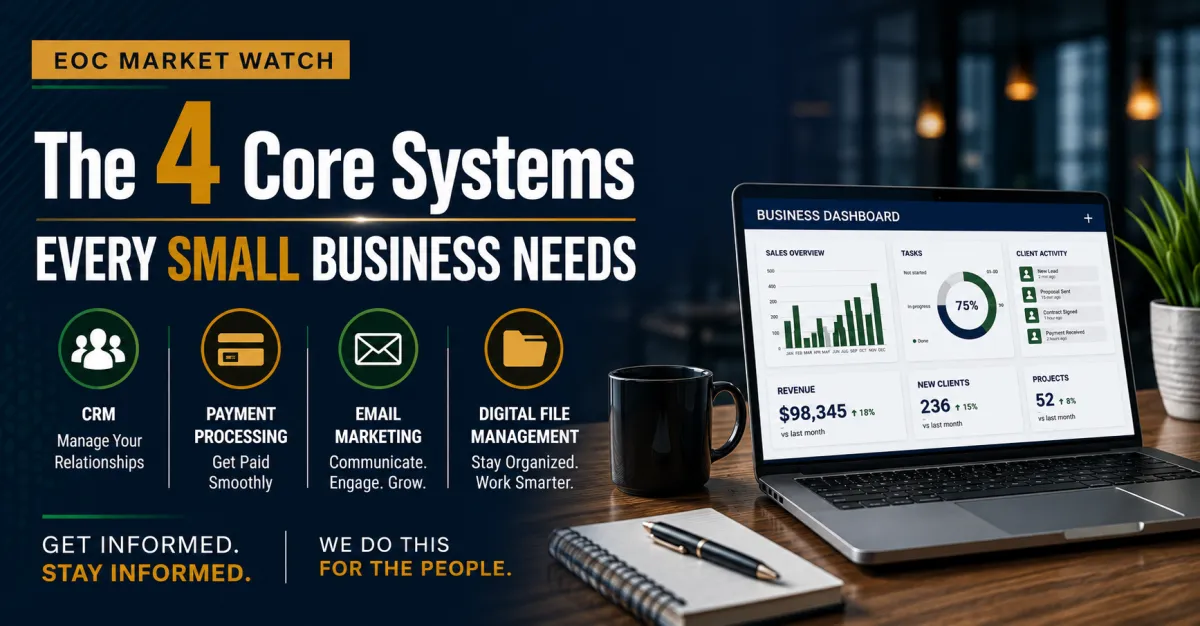
The 4 Core Systems Every Small Business Needs
Running a business isn’t just about having a great product or service. It’s about building systems that allow your business to operate consistently.
Think of systems as the infrastructure behind your business. The right systems save time, reduce mistakes, and make growth much easier.
Whether you’re just starting your first business or looking to become more organized, these four core systems provide a strong operational foundation.
⸻
1. Customer Relationship Management (CRM)
A Customer Relationship Management (CRM) system helps you organize customer information, track conversations, and manage potential sales opportunities.
Instead of relying on memory or scattered notes, a CRM keeps your customer interactions in one place so you can follow up consistently and provide a better experience.
Examples:
HubSpot CRM
Zoho CRM
Salesforce
Benefits:
Store customer contact information
Track leads and sales opportunities
Schedule follow-ups
Improve customer service
⸻
2. Payment Processing System
A payment processing system allows customers to pay you quickly and securely.
Whether you’re selling products, services, subscriptions, or event tickets, having a reliable payment solution makes it easier to get paid while keeping your financial records organized.
Examples:
Stripe
Square
PayPal
Benefits:
Accept online payments
Send invoices
Manage recurring subscriptions
Track revenue and transactions
⸻
3. Email Marketing System
An email marketing platform allows you to communicate directly with your audience.
Unlike social media, where algorithms determine who sees your content, email gives you a direct line of communication with subscribers who have chosen to hear from you.
Examples:
Mailchimp
Kit (formerly ConvertKit)
ActiveCampaign
Benefits:
Send newsletters
Automate welcome emails
Promote products and services
Build long-term customer relationships
⸻
4. Digital File Management System
Every business generates important files—from contracts and invoices to logos, marketing materials, and customer documents.
A digital file management system helps keep everything organized, accessible, and securely backed up.
Examples:
Google Drive
Dropbox
Microsoft OneDrive
Benefits:
Store business documents securely
Share files with clients and team members
Organize important records
Access files from virtually anywhere
⸻
Final Thoughts
You don’t need dozens of software tools to run an effective business. In fact, many successful entrepreneurs start with just a handful of well-chosen systems that work together.
By establishing these four core systems early, you’ll spend less time searching for information, following up manually, or fixing preventable mistakes—and more time serving customers and growing your business.
Technology should simplify your business, not complicate it. Focus on building systems that support your goals, and allow those systems to grow alongside your business.
Subscribe to Entrepreneurs of Color Magazine from the Entrepreneurs of Color Marketplace for more business tips & advice.